There are significant differences between DIP production line equipment and SMT production line equipment in terms of automation level, production efficiency, application scenarios, cost structure, and product quality, as follows:
1、 Automation level and production efficiency
SMT production line equipment
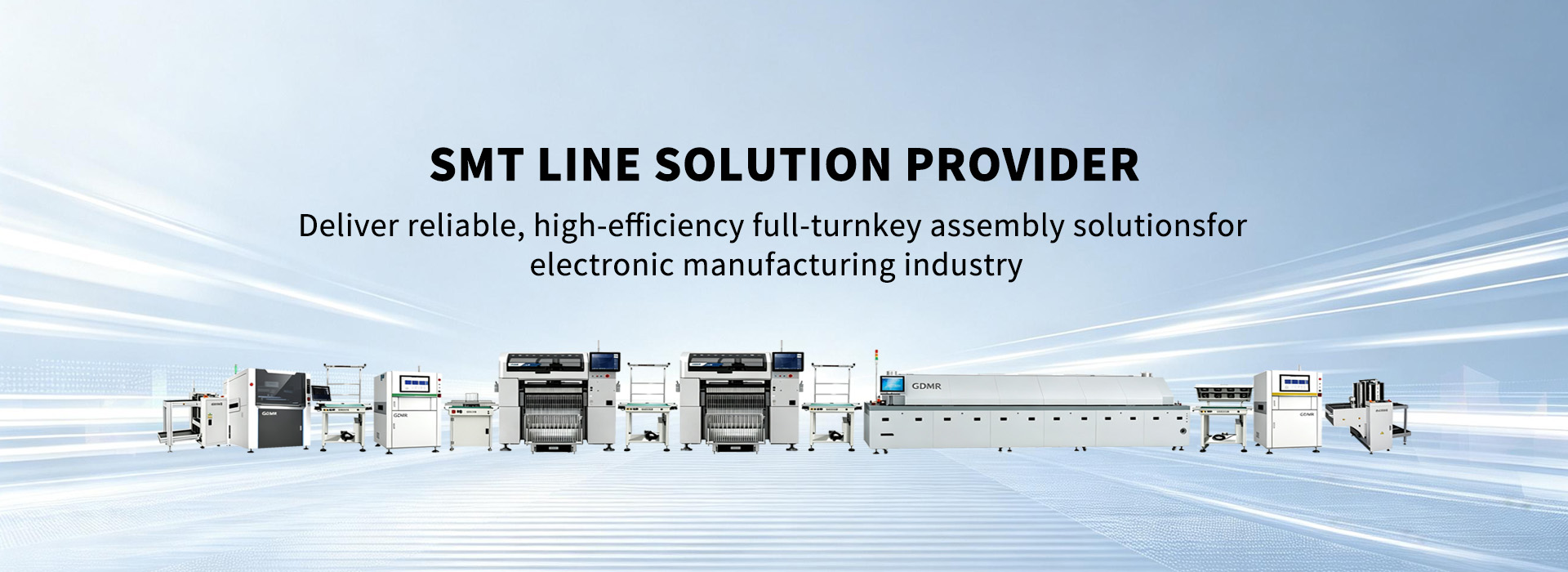
Highly automated: integrating board loading machines, printing machines, surface mount machines, reflow soldering furnaces, AOI testing equipment, etc., to achieve full process automation. The surface mount machine can mount thousands of components per hour, and the reflow soldering furnace ensures welding quality through precise temperature control.
Efficient production: suitable for large-scale production, with a daily production capacity of tens of thousands of pieces per line, flexible and adjustable production rhythm, meeting the needs of multiple varieties and small batches.
DIP production line equipment
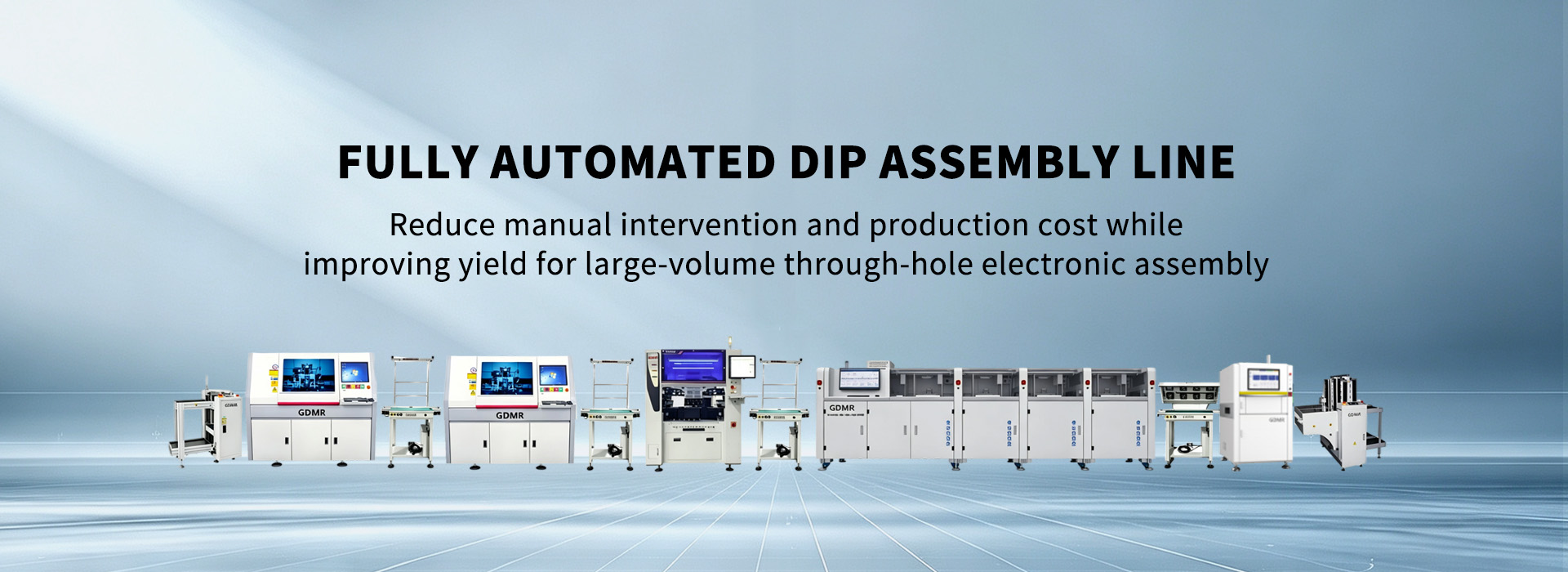
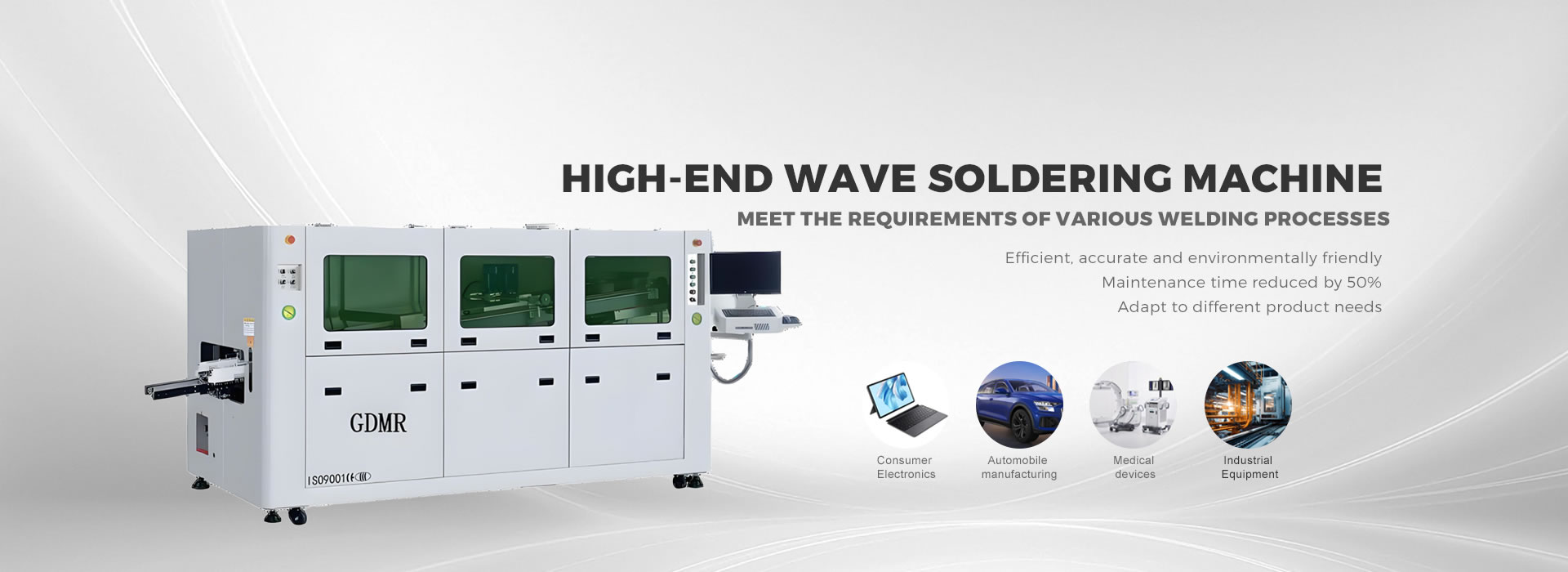
Mainly semi-automatic: relying on manual or semi-automatic plug-in machines, wave soldering furnaces achieve welding automation, but the overall automation level is lower than SMT.
Low efficiency: The speed of the plug-in machine is much lower than that of the surface mount machine, and the welding process is complex and easily affected by human factors. The daily production capacity is usually 2000-3000 plug-in PCB boards.
2、 Application scenarios and product adaptability
SMT production line equipment
Consumer electronics dominance: suitable for high-density, miniaturized products such as mobile phones and tablets, with small component volume, light weight, and support for PCB double-sided mounting.
High precision requirements: Through laser positioning, visual guidance and other technologies, precise placement of 0.2mm pitch components can be achieved to meet high reliability scenarios such as automotive electronics and medical equipment.
DIP production line equipment
Specialized for specific fields: In military, aerospace and other scenarios that require high mechanical stress or high temperature environments, the pins of DIP components provide better mechanical support and heat dissipation effects.
High power component adaptation: suitable for large volume and high heat generating components such as power devices and connectors, but not conducive to product miniaturization.
3、 Cost Structure and Investment Return
SMT production line equipment
High initial investment: Equipment such as fully automatic surface mount machines and reflow soldering furnaces are expensive, but the unit product cost significantly decreases with increasing production.
Long term low cost: automation reduces manual dependence, solder paste dosage error is controlled within ± 5%, material waste is reduced, and the yield rate is increased to over 98%.
DIP production line equipment
Low equipment cost: The investment in plug-in machines, wave soldering furnaces, etc. is relatively small, making them suitable for small-scale production or prototype production.
High operating costs: manual plugins lead to increased labor costs, and DIP components are bulky, occupying more PCB space and increasing raw material costs.
4、 Product quality and reliability
SMT production line equipment
High precision control: AOI detection intercepts defects such as excessive tin, insufficient tin, and offset, while X-RAY inspection reveals the welding quality inside BGA, with a defect rate of less than 0.2%.
Excellent consistency: Automated production ensures consistent placement and welding parameters for each product, suitable for scenarios with high stability requirements.
DIP production line equipment
Human error risk: Artificial plugins may cause pin bending, virtual soldering, and other issues, which need to be compensated for through secondary testing (such as ICT testing).
Strong mechanical stability: DIP component pins penetrate PCB through holes to form a secure connection, suitable for vibration and impact environments.
5、 Maintenance and Scalability
SMT production line equipment
Modular design: The equipment supports fast line switching, the programming system simplifies the product switching process, and adapts to multi variety production.
Predictive maintenance: By monitoring equipment status through sensors, early warning of faults and reducing downtime.
DIP production line equipment
Limited flexibility: The speed and width adjustment of the plugin line require manual operation, making it difficult to quickly respond to changes in production pace.
Low maintenance cost: The mechanical structure is simple, with a lower failure rate than SMT equipment, but it relies heavily on manual operation.