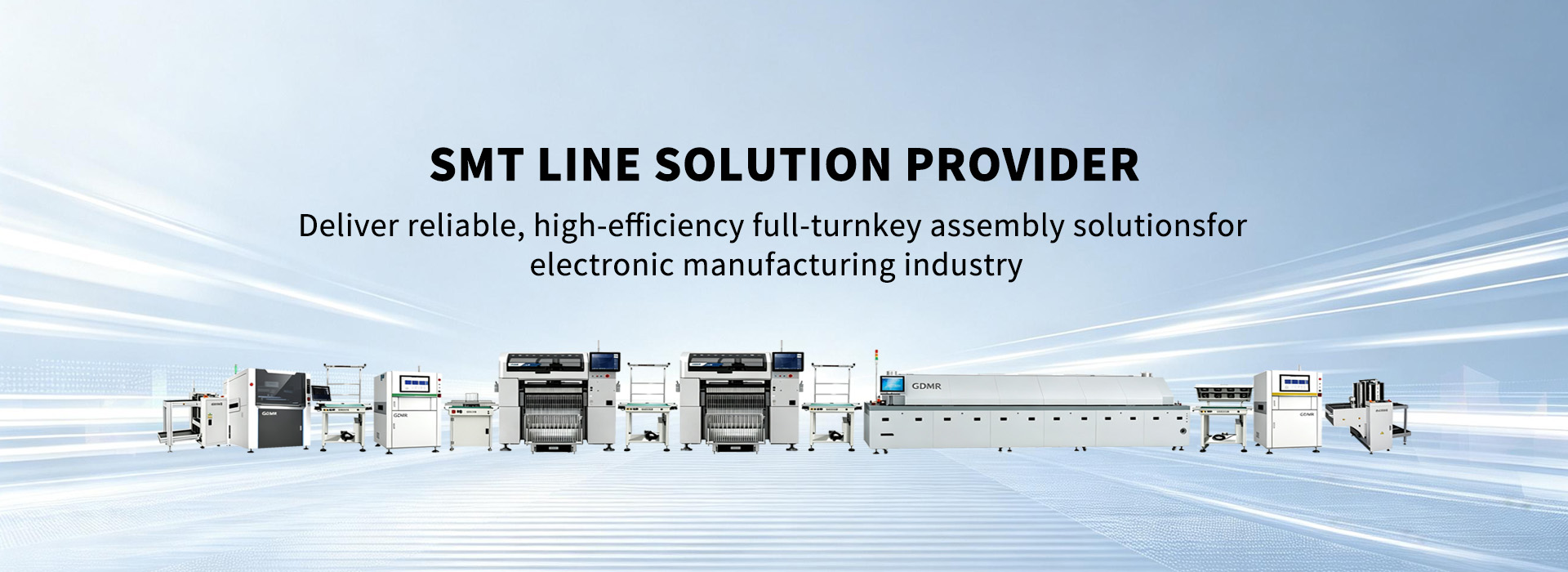
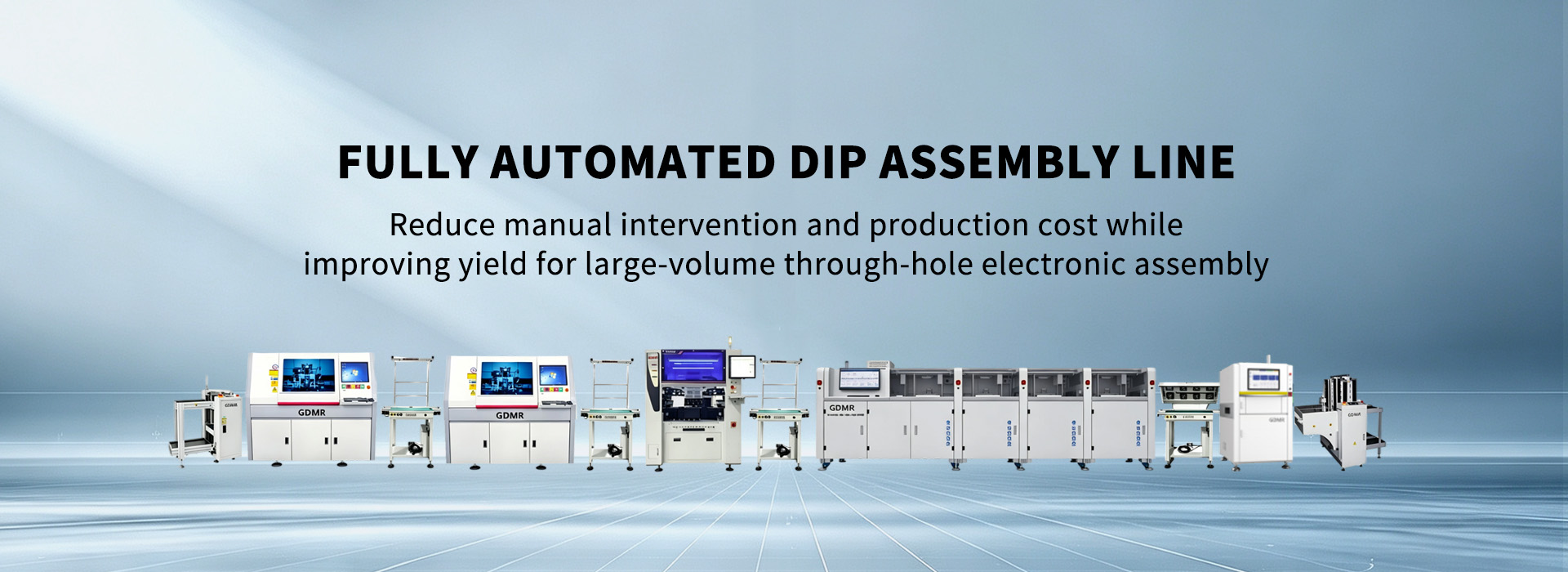
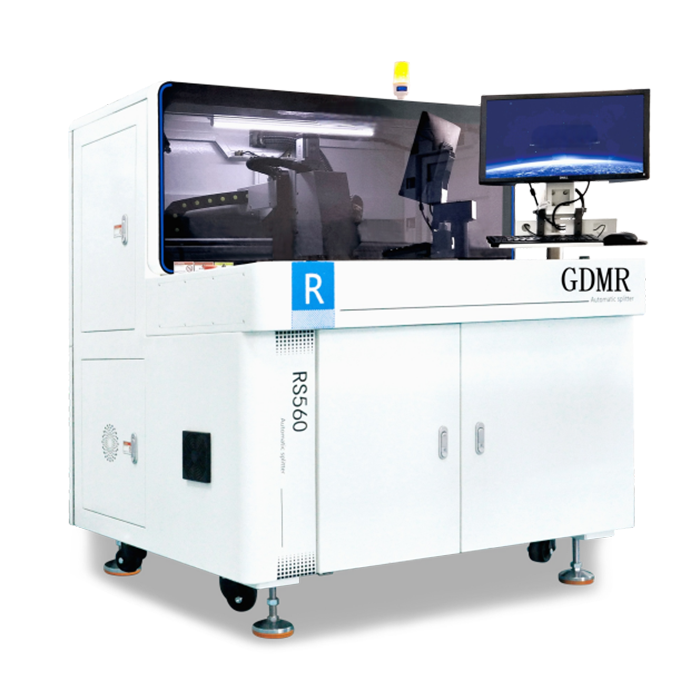
SMT (Surface Mount Technology) production line equipment significantly improves the efficiency, quality, and flexibility of electronic manufacturing through high automation and precision control. Its core advantages are reflected in multiple dimensions such as efficiency improvement, quality optimization, cost reduction, technological adaptability, and production management improvement, as follows:
1、 Efficiency improvement: High speed automation, shortened production cycle
Full process automation
The SMT production line integrates printing, mounting, welding, testing and other processes, achieving seamless connection through robotic arms, conveyor belts and automatic control systems. For example, a high-speed surface mount machine can mount dozens of components per second, and its production capacity far exceeds manual operation under all-weather operation. The daily output of a single line can reach tens of thousands of pieces.
Parallel processing capability
The dual track or multi track SMT machine supports simultaneous processing of different PCB boards, combined with automatic loading/unloading machines, reducing equipment idle time. Some high-end models (such as Siemens HS60) can achieve double-sided mounting, further compressing the production cycle.
Quick Line Switching Support
Modular design enables devices to quickly switch product models, coupled with intelligent programming systems, reducing line changing time from hours to minutes, and adapting to the needs of multiple varieties and small batch production.
2、 Quality optimization: precise control, reducing human error
High precision mounting
Visual positioning systems (such as the Keyence CV-X series) can recognize components with a spacing of 0.2mm, with a mounting accuracy of ± 0.03mm, ensuring reliable connections for small devices such as BGA and QFN, and reducing the risk of virtual soldering and short circuits.
Welding Quality Assurance
Reflow soldering furnace: precise control of heating/cooling rate through ten temperature control curves to avoid component cracking caused by thermal shock.
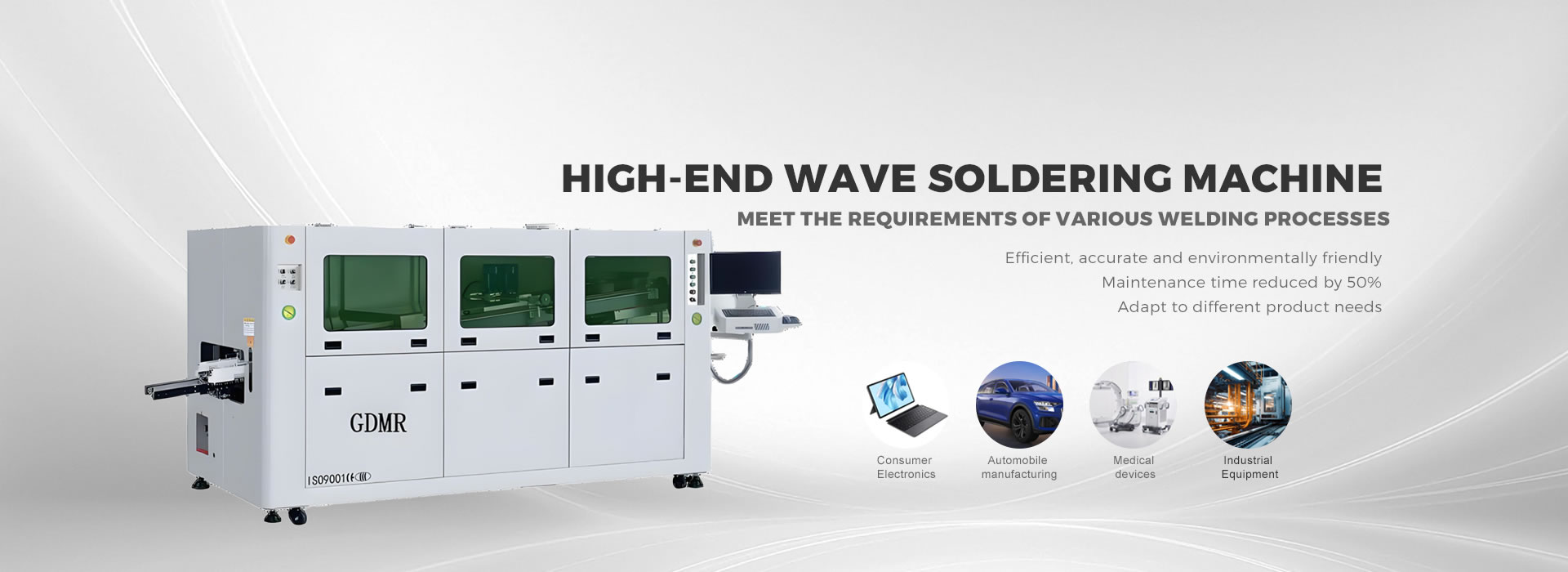
Wave soldering machine: spray type flux coating and nitrogen protection are used to reduce oxidation and improve the fullness of solder joints.
X-RAY inspection: Perspective inspection of BGA internal welding quality, with a defect detection rate of over 99%.
Real time defect interception
SPI (solder paste inspection) and AOI (automatic optical inspection) provide real-time feedback on issues after printing and mounting, controlling defective products at the front end of the production line and avoiding waste of resources in subsequent processes.
3、 Cost reduction: resource intensive, improving input-output ratio
Reduce material waste
The precision printing machine controls the solder paste dosage error within ± 5%, saving more than 30% of materials compared to manual printing.
AOI detection intercepts defective products, reducing the cost of rework after reflow soldering (manual rework costs are 5-10 times higher than production line interception).
Labor cost reduction
Automated production lines only require a small number of operators to monitor equipment, reducing labor requirements by 60% -80% compared to traditional through hole insertion (THT) production lines. For example, a medium-sized SMT line only requires 2-3 people to operate.
Improved space utilization
Compact equipment layout, such as vertically stacked reflow soldering furnaces, increases unit area production capacity by 40%, making it suitable for high-density production environments such as clean workshops.
4、 Technical adaptability: supports high-density and miniaturized design
Micro component processing capability
Support the placement of 01005 (0.4mm × 0.2mm) ultra small components to meet the high-density PCB requirements of smartphones, wearable devices, and other devices. Some devices (such as Panasonic AM100) can handle QFP devices with a spacing of 0.3mm.
Compatibility of Alien Components
By using flexible feeders (such as vibration discs+visual guidance) and 3D mounting heads, irregularly shaped components (such as connectors, sensors) can be processed, expanding product design freedom.
New material application support
Compatible with special materials such as flexible PCBs and ceramic substrates, combined with low-temperature welding processes, suitable for high-temperature environments such as automotive electronics and aerospace.
5、 Production management improvement: data-driven, improving decision-making efficiency
Real time data collection
The equipment integrates sensors and MES system to monitor key indicators such as installation speed, yield, and equipment status in real-time, and generate visual reports (such as OEE analysis).
predictive maintenance
By using vibration analysis, temperature monitoring and other technologies, equipment failures (such as wear and tear of surface mount machine motors) can be alerted in advance, reducing downtime and lowering maintenance costs by 30%.
Traceability and Compliance
The mounting data of each PCB (such as component batch, operator, timestamp) can be traced, meeting quality system requirements such as ISO 9001 and IATF 16949, and assisting in the certification of industries such as automotive and medical.
6、 Environmental protection and safety improvement
Lead free process support
The device is compatible with lead-free solder such as SnAgCu, meets environmental regulations such as RoHS and REACH, and avoids heavy metal pollution.
Exhaust gas treatment system
The integrated catalytic combustion device in the reflow soldering furnace decomposes volatile organic compounds (VOCs) in the flux into CO ₂ and H ₂ O, with emission concentrations lower than national standards.
Security protection design
Emergency stop buttons, light curtain sensors, and other devices prevent operators from accidentally touching high-speed moving parts, reducing the accident rate by over 90%.
7、 Industry case verification
In the field of consumer electronics: After a certain smartphone manufacturer adopted SMT lines, the efficiency of motherboard mounting increased from 1200 points/hour to 3500 points/hour, and the pass through rate increased from 92% to 98.5%.
In the field of automotive electronics, a Tier 1 supplier achieved automated production of ECU modules through SMT lines, reducing the welding defect rate from 0.5% to 0.02% and saving over 2 million yuan in annual repair costs.
In the field of medical equipment, a certain implantable device manufacturer uses high-precision SMT lines to ensure the PCB's resistance to moisture and corrosion, and the product life is extended to more than 10 years.