
Mingrui


Mingrui

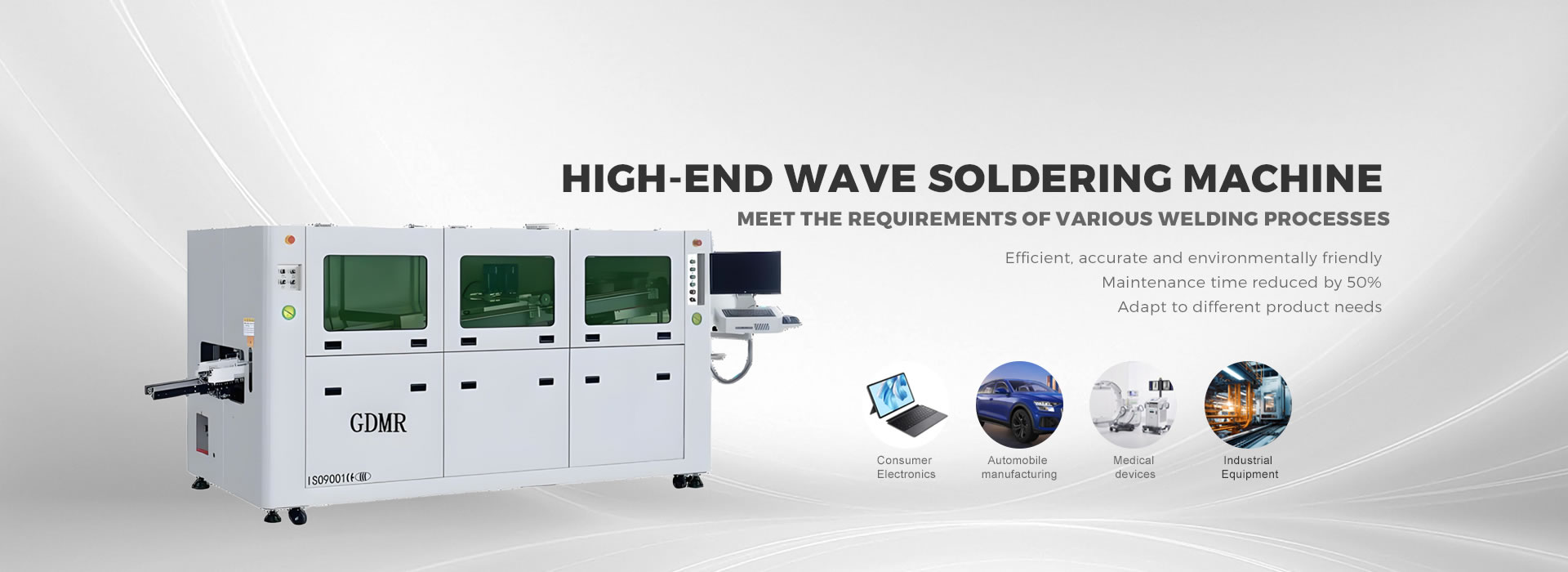
When many electronics manufacturing enterprises select through-hole soldering solutions, they compare selective wave soldering with traditional wave soldering. Traditional wave soldering is suitable for full-board through-hole insertion and large-batch single-variety production. The entire circuit board passes through the solder wave. For mixed-assembly boards, expensive masking fixtures need to be made, which easily causes SMD components to be damaged by heat. Selective wave soldering uses point-to-point local soldering, requires no masking fixtures, and allows each solder joint to have its soldering time, temperature, and solder wave height set independently. The heat-affected range is small, effectively avoiding defects such as bridging, cold soldering, and component heat damage. It is very suitable for high-density mixed-assembly boards and high-end boards with scattered solder joints.
Dongguan Mingrui Technology Co., Ltd. can provide soldering solution evaluation based on the customer's PCB material, number of solder joints, capacity requirements, and product reliability level. Mingrui selective wave soldering adopts a stable electromagnetic pump solder wave system, with small solder wave fluctuation and low dross generation, reducing solder consumable costs; the software supports graphical programming, and importing PCB files can quickly generate soldering programs, making product changeover convenient. For foreign trade EMS factories, Mingrui Technology can assist customers in evaluating production line layout, recommend standalone or inline models, avoid process risks, and improve the yield rate of export products.



QR WhatsAPP

QR WeChat